
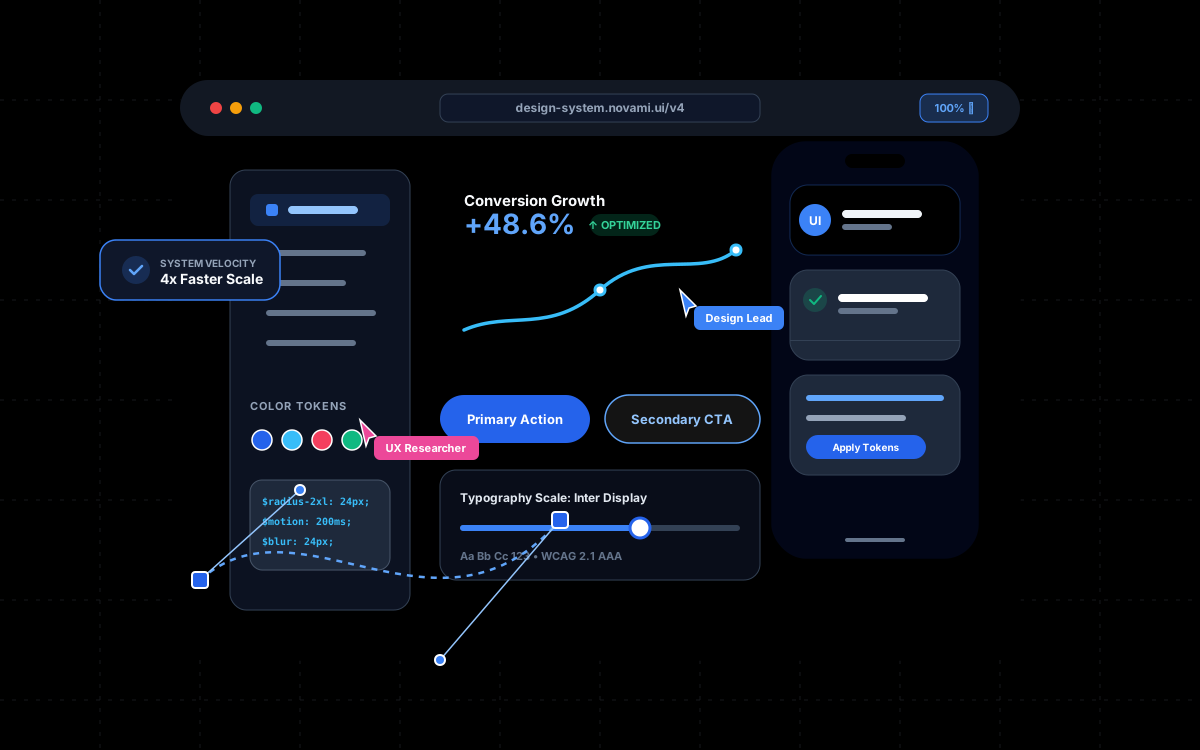
- Atomic design token architectures synchronize design decisions between Figma and React production code.
- Unified design systems eliminate redundant styling and accelerate engineering shipping velocity by up to 50%.
- Tactile micro-interactions and smooth motion curves make software feel responsive and delightfully intuitive.
- WCAG 2.1 AA accessibility compliance expands audience reach while preventing legal and usability bottlenecks.
The Strategic Value of Scalable Design Systems
A digital product is only as effective as the experience it delivers to the end user. When enterprise applications lack coherent design systems, user onboarding suffers, cognitive load increases, and development cycles slow down by up to 50%.
At Novami Infotech Pvt. Ltd., our human-centric UI/UX philosophy bridges deep user research with scalable design tokens, producing interfaces that delight users and convert visitors into long-term advocates.
Core Components of a High-Velocity Design System
Learn more about how our UI/UX Design services transform complex enterprise software into intuitive, world-class user experiences.
Questions About This Architecture
What is the difference between a UI kit and a comprehensive Design System?
A UI kit is a visual collection of static buttons and inputs. A comprehensive Design System includes codified design tokens, accessibility rules, coded component libraries, documentation, and governance workflows.
How do design systems improve cross-team collaboration?
Engineers and designers share a single source of truth for color tokens, typography scales, and component APIs, eliminating misunderstandings during handoffs.
Written by Novami Design Studio
Head of Product Experience & UI/UX
Product designers, UX researchers, and design token architects crafting accessible, human-centric design systems for high-velocity enterprise software products.
View Author Profile & All Articles